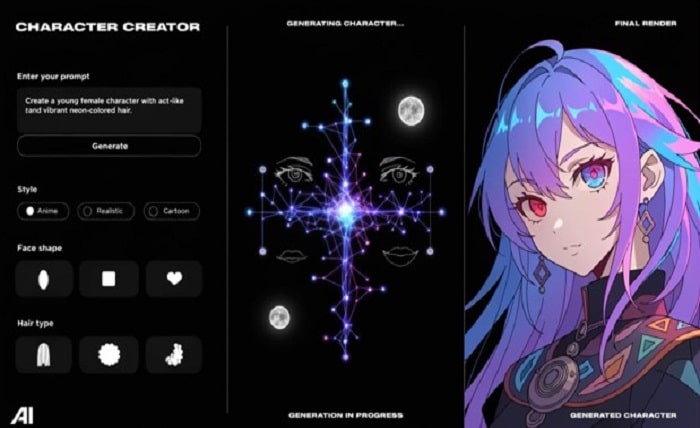
Anime-style art has a very specific visual language. Large expressive eyes, clean line work, dramatic lighting, distinctive hair rendering. That specificity is exactly why AI anime art generators became popular so quickly. The style is recognizable enough that even imperfect AI output often reads as convincingly anime, which makes these tools especially satisfying to experiment with compared to more generic AI image generators.
This guide covers how these tools actually work, what separates a genuinely useful free AI anime art generator from a disappointing one, practical tips for getting better results, and the ethical questions worth understanding before you get too deep into using one.
How an AI Anime Generator Actually Works
Most AI anime art generators rely on image generation models trained on large collections of anime and manga style artwork. When you type a text description, known as a prompt, the model interprets that description and generates a new image built from patterns it learned during training, rather than copying any single source image directly.
This means the output is genuinely new in a technical sense, even though the visual style closely mirrors the anime aesthetic the model was trained on. The quality and consistency of results depend heavily on how the specific model was trained, which is why different anime generators can produce noticeably different results from the exact same prompt.
Some tools also support additional inputs beyond text, such as a reference sketch you upload, a specific pose you want followed, or a rough color palette. These additional controls tend to produce more predictable results than text prompts alone, since they give the model more concrete visual information to work from.
What Separates a Good Free Tool From a Weak One
Free AI anime art generators vary enormously in quality, and a few practical factors are worth checking before investing time into one.
Resolution limits. Many free tiers cap output resolution significantly below what paid tiers offer. If you plan to use the image for anything beyond quick sharing, check whether the free resolution is actually usable for your purpose.
Generation limits. Some tools offer generous free daily generations, while others restrict you to just a handful before requiring payment. Since getting a good result often takes several attempts, a tool with very limited free generations can feel frustrating quickly.
Style consistency. A strong anime generator should produce results that actually look anime, not a vague approximation that could pass for several other art styles. Testing a tool with a simple, specific prompt is usually the fastest way to judge this.
Watermarking policies. Some free tools add a visible watermark to output, which matters if you intend to use the image anywhere public. Check this before generating dozens of images you later cannot use cleanly.
Getting Better Results From Your Prompts
The gap between a mediocre AI anime generator result and a genuinely striking one usually comes down to prompt quality rather than the tool itself.
Being specific about character details tends to help significantly. Vague prompts like a cool anime character produce inconsistent, generic results. Detailed prompts that specify hair color and style, an outfit description, an expression, and a setting give the model much clearer direction to work from.
Describing the art style explicitly also matters, since anime itself covers a wide visual range. Specifying something like nineteen nineties cel shaded anime style or soft modern anime style with pastel colors will usually produce noticeably different results, even though both technically fall under the anime umbrella.
Lighting and mood descriptions add depth that many people skip. Mentioning dramatic backlighting, soft morning light, or a moody night scene tends to elevate output quality more than most people expect from a few extra words.
Generating multiple variations before settling on a final image is standard practice rather than a sign something went wrong. Since generation is fast and often free within daily limits, comparing several attempts against the same prompt, or slightly adjusted versions of it, consistently produces better final results than accepting the first output.Understanding the Copyright and Ethics Questions
Anime art generation raises real questions that are worth understanding honestly rather than glossing over, since they affect how you should think about using and sharing generated images.
AI image models are trained on large datasets that often include copyrighted artwork, frequently without the original artists’ explicit consent. This has generated genuine and ongoing debate within the art community about whether training on copyrighted work without permission is fair, and whether artists whose distinctive styles get echoed in AI output deserve compensation or credit. Reasonable people disagree strongly on this, and the legal frameworks around it are still actively evolving in different countries.
Separately, generating art that closely mimics a specific living artist’s distinctive personal style, even without reproducing any particular image, raises its own ethical questions about whether that crosses a line the artist would object to, even where it may be legally permissible.
There are also more straightforward copyright concerns worth being aware of. Generating images of existing copyrighted anime characters, even in a new pose or scene, can raise copyright issues if you intend to use that image commercially or distribute it widely, since the underlying character design itself remains protected regardless of how the image was produced.
None of this means AI anime generation is inherently problematic to use for personal exploration, learning, or casual creative projects. It does mean approaching commercial use, public distribution, or close imitation of a specific artist’s style with real awareness of these open questions, rather than assuming the technology sidesteps them entirely.
Practical Uses That Tend to Work Well
Certain use cases for AI anime art generators tend to be genuinely satisfying and relatively low friction from an ethical standpoint.
Personal original character design, where you are building a character that exists only in your own project, works well since there is no existing copyrighted character being imitated. Concept exploration for a story or game, testing what a character might look like before committing to a final design, is another strong fit. Casual creative experimentation, simply exploring what different prompts and styles produce for fun, carries low stakes as long as results stay personal rather than distributed commercially.
Where more caution is warranted includes anything intended for commercial sale, close imitation of a specific living artist’s recognizable style, and generating existing copyrighted characters for anything beyond personal, non commercial use.
Bringing It Together
AI anime art generators, free or paid, have genuinely lowered the barrier to producing anime style visuals, turning what once required years of drawing practice into something achievable through careful prompting in minutes. Getting good results consistently comes down to specific, detailed prompts and a willingness to generate several attempts rather than settling on the first output.
The technology itself is powerful and genuinely fun to experiment with, but using it thoughtfully means holding two things at once, enjoying what it makes possible while staying honestly aware of the real questions around training data, artist consent, and copyright that the broader AI art community is still actively working through.