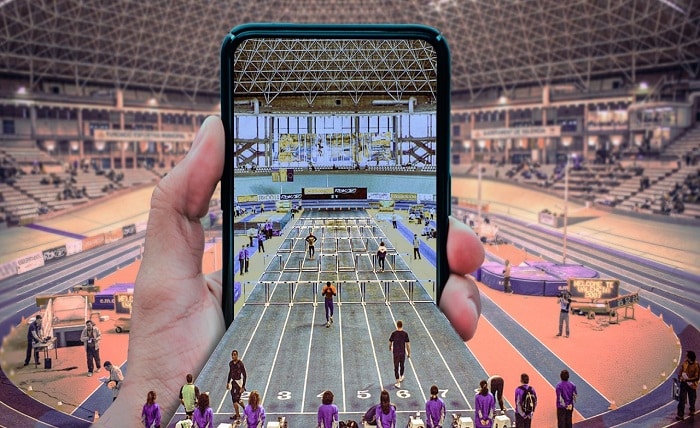
Digital publication architectures face unprecedented stress during high-profile live events. Modern audiences no longer tolerate delayed updates, static page reloads, or inconsistent score reporting. Content platforms must deliver instant data, sub-second latency, and unbroken stream uptime across mobile and desktop environments. Engineering teams behind leading media portals must construct resilient real-time architectures capable of absorbing sudden traffic surges while preserving data fidelity.
Establishing a reliable real-time media framework requires moving away from monolithic CMS deployments. Legacy architectures rely heavily on database-backed page renders, which inevitably collapse under massive concurrency. Modern solutions decouple content management from dynamic data distribution. By leveraging event-driven microservices, distributed pub/sub channels, and intelligent edge caching, media organizations deliver synchronous live updates to millions of simultaneous connections without compromising platform availability.
Architectural Imperatives for Real-Time Event Streaming and Data Delivery
Designing a high-throughput event platform begins with the ingestion engine. Live sports coverage demands continuous ingestion from external feed providers, telemetry sensors, and editorial inputs. These data streams enter the pipeline as raw JSON or binary payloads, requiring immediate parsing, validation, and enrichment before fan-out distribution. Enterprise systems route incoming payloads through asynchronous message brokers such as Apache Kafka or AWS Kinesis. These brokers decouple data ingestion from consumer microservices, ensuring that peak data rates do not overwhelm downstream delivery components.
WebSocket servers manage persistent client connections, allowing servers to push updates instantly without polling overhead. To scale WebSocket fleets horizontally, engineers utilize stateless connection gateway layers backed by Redis Pub/Sub or NATS clusters. When an event update occurs, the worker service publishes a single payload to the message broker. The pub/sub backbone broadcasts this message to gateway nodes, which push the update across active client connections. This pub/sub pattern eliminates redundant database queries and scales linearly as concurrent connection counts increase.
Integrating specialized sports data providers requires robust API abstraction layers to handle distinct event types and varying update frequencies. For instance, dedicated tracking platforms such as desi cricket live india demonstrate how real-time sports environments aggregate ball-by-ball scoring, live match odds, player metrics, and streaming scoreboards into a unified interface. These specialized feeds provide continuous state updates during live matches, offering granular insights into ongoing sports dynamics while maintaining tight synchronization between mathematical odds and physical field events. Incorporating such multi-layered live telemetry into broader media portals enriches editorial content, keeping readers engaged through live-updating statistics and interactive visualizations.
To implement this ingestion architecture seamlessly, media engineering teams follow a systematic, multi-tiered deployment pipeline:
- Deploy edge-based API gateways to authenticate and rate-limit incoming telemetry requests from third-party sports providers.
- Configure distributed message brokers with multi-region partition replication to prevent single-point-of-failure risks during peak match hours.
- Establish stateful WebSocket connection pools behind layer-4 load balancers to distribute persistent socket connections evenly across server nodes.
- Implement client-side fallback mechanisms, such as Server-Sent Events (SSE) or HTTP long polling, for users on restricted enterprise networks.
Data validation must occur in memory before broad distribution. Malformed payloads or out-of-order events compromise reader trust and break frontend rendering logic. Ingestion pipelines execute schema validation using lightweight byte-buffer formats or JSON Schema checkers running directly within worker nodes. Standardizing internal message models isolates frontend components from vendor-specific feed changes, ensuring that template layouts remain stable regardless of upstream feed adjustments.
Edge computing nodes play a critical role in reducing global delivery latency. Modern CDN providers allow developers to execute lightweight logic directly at the network edge. Edge workers authenticate requests, assemble personalized user contexts, and cache static assets close to end users. By processing user requests at the edge, platforms reduce round-trip time to origin servers, delivering instant page loads even during peak traffic surges.
Technical Strategies for System Resilience and High-Concurrency UX
System resilience during high-concurrency events depends on aggressive load management and failure isolation strategies. When concurrent user traffic surpasses anticipated baselines, systems must degrade gracefully rather than experience complete outages. Circuit breakers monitor downstream microservice health, automatically isolating failing components before cascading errors bring down the primary media platform. If an interactive visualization widget fails under heavy load, the primary editorial article remains fully accessible without UI errors.
Client-side state management requires careful optimization to prevent browser execution bottlenecks. Modern web applications process frequent incoming WebSocket messages, which can cause excessive DOM re-renders and UI freezing if handled inefficiently. Engineering teams address this by batching state updates using frame-aligned animation loops. Instead of applying DOM modifications on every incoming packet, the client application queues data updates and flushes them to the view layer at fixed 60-fps intervals.
To guarantee zero-downtime execution under extreme traffic spikes, technical managers measure performance against strict performance baselines. The system must maintain a sub-200ms end-to-end P99 latency benchmark, measuring the duration from provider ingestion to client render. WebSocket fan-out capacity must support at least 500,000 active concurrent connections per edge cluster. Furthermore, origin shield hit ratios must remain above 98% at edge distribution points, while automated failover recovery across redundant availability zones must execute within 5 seconds.
Caching strategies for live sports media require a hybrid approach combining static asset caching with dynamic state validation. Static assets such as stylesheets, images, and core JavaScript bundles carry long TTL headers and reside permanently on CDN edge servers. Dynamic data fragments, such as current match scores or player stats, utilize short TTLs or cache-tags invalidated explicitly via API webhook triggers. This hybrid strategy ensures maximum cache hit ratios while maintaining absolute data accuracy for live match metrics.
Database performance optimization remains vital for historical analytics and user interaction tracking. Read-heavy live media platforms utilize read-replicas and distributed key-value stores like Redis to offload traffic from primary write databases. User preferences, bookmarked matches, and historical stats resolve entirely from memory-cached datastores. Write operations, such as user comments or live poll votes, route to asynchronous queue workers that process database writes in background batches, protecting primary databases from connection exhaustion.
Front-end architecture must support progressive enhancement to accommodate diverse client network conditions. Mobile users on fluctuating cellular connections require lightweight payload structures and resilient reconnection routines. When a network connection drops, the client application stores last-known match states locally and requests a differential state sync upon reconnection. This differential sync fetches only missing event deltas rather than the entire match history, minimizing data transfer and restoring live synchronization in milliseconds.
Security controls must operate continuously without introducing latency into live data streams. Distributed Denial of Service (DDoS) mitigation services operate at layer 3 and layer 7, filtering malicious traffic before it reaches origin infrastructure. Rate-limiting policies protect public API endpoints from automated scraping scripts that exhaust server resources. Token-based authentication for real-time channels ensures that only authorized clients subscribe to premium data streams, safeguarding proprietary metrics and premium media feeds.
Conclusion
Building scalable real-time infrastructures for digital sports media requires an integrated approach to software architecture, data management, and client-side performance. By moving from legacy synchronous architectures to event-driven, edge-cached microservices, media organizations achieve the high concurrency handling and sub-second latency demanded by modern audiences. Incorporating rich, real-time data feeds elevates content quality, deepens reader engagement, and secures a competitive advantage in the modern media landscape. Technical leaders who prioritize low latency, system resilience, and clean API abstractions establish a durable foundation for future digital publishing innovations.